 Image 1 of 1
Throughout the Cold War and into the modern era, a disturbing pattern has quietly followed the aerospace and advanced technology industries — scientists, engineers, and defense specialists dying under circumstances ruled accidental, unexplained, or hastily dismissed.
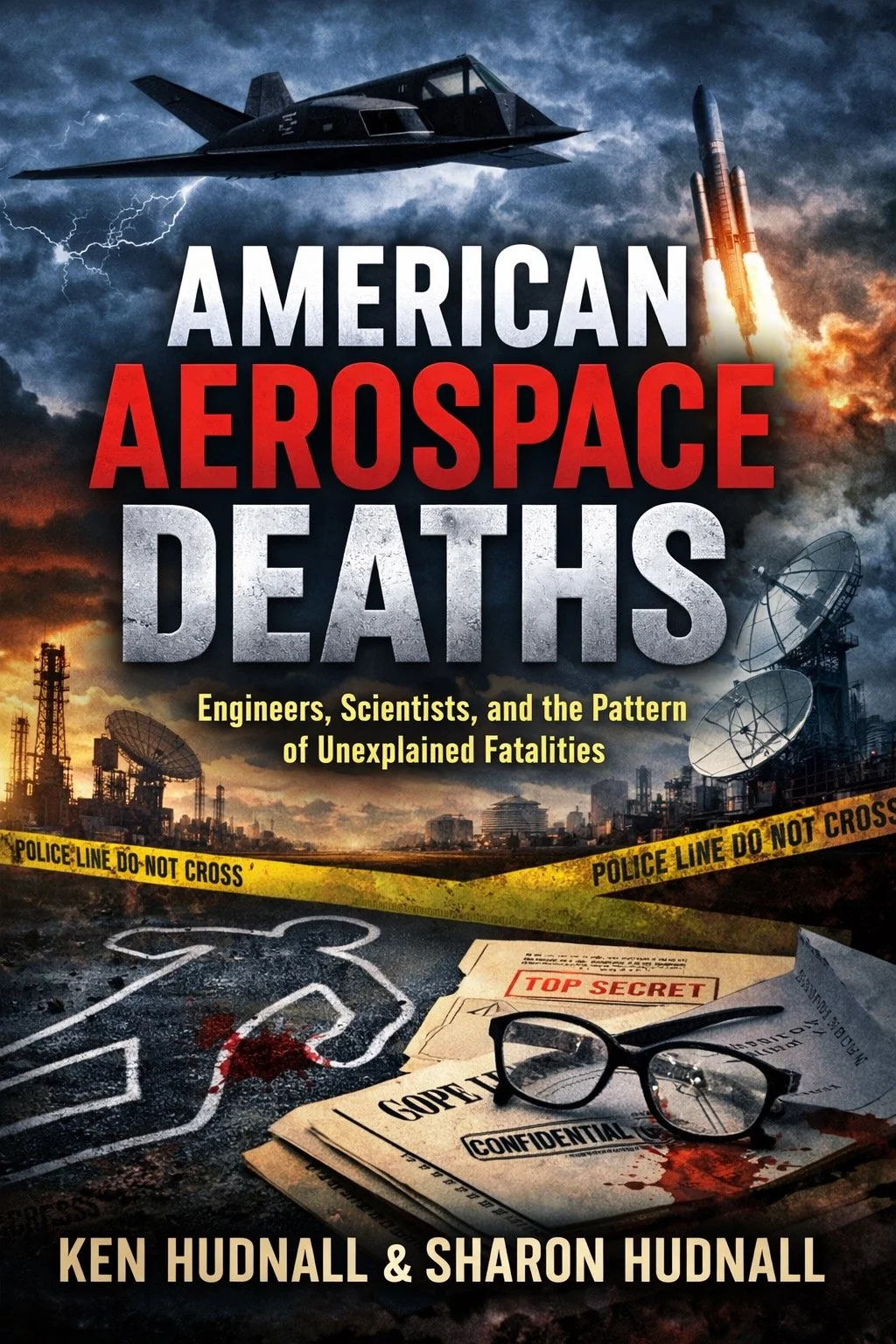
American Aerospace Deaths compiles documented cases spanning decades: researchers found dead before testimony, project insiders lost in improbable accidents, and experts connected to sensitive programs who died just as their work approached critical breakthroughs. Individually, each case appears tragic but ordinary. Together, they form a pattern that demands scrutiny.
Using newspaper archives, coroner reports, congressional records, and declassified material, this book reconstructs timelines and associations often ignored when the cases are viewed separately. Some deaths may indeed be coincidence. Others raise difficult questions about secrecy, national security, and the risks faced by those working at the edge of technological power.
The book does not claim a single explanation.
Instead, it asks whether the number of “unlikely events” has simply become too large to ignore.
Throughout the Cold War and into the modern era, a disturbing pattern has quietly followed the aerospace and advanced technology industries — scientists, engineers, and defense specialists dying under circumstances ruled accidental, unexplained, or hastily dismissed.
American Aerospace Deaths compiles documented cases spanning decades: researchers found dead before testimony, project insiders lost in improbable accidents, and experts connected to sensitive programs who died just as their work approached critical breakthroughs. Individually, each case appears tragic but ordinary. Together, they form a pattern that demands scrutiny.
Using newspaper archives, coroner reports, congressional records, and declassified material, this book reconstructs timelines and associations often ignored when the cases are viewed separately. Some deaths may indeed be coincidence. Others raise difficult questions about secrecy, national security, and the risks faced by those working at the edge of technological power.
The book does not claim a single explanation.
Instead, it asks whether the number of “unlikely events” has simply become too large to ignore.