 Image 1 of 1
Modern warfare brought soldiers into some of the oldest inhabited landscapes on Earth — valleys where armies have marched for thousands of years and where local traditions warned of places best avoided after dark.
During night patrols, watch rotations, and remote outpost duty, service members reported encounters that did not fit combat, equipment malfunction, or misidentification.
Figures walking along ridgelines miles from any village.
Voices carried across empty terrain with no visible source.
Shapes seen through optics that vanished to the naked eye.
Movements tracked on thermal devices where nothing stood.
Lights appearing in restricted valleys long after air operations had ended.
Most of these incidents were never formally recorded.
They did not interfere with operations — and no explanation could be offered.
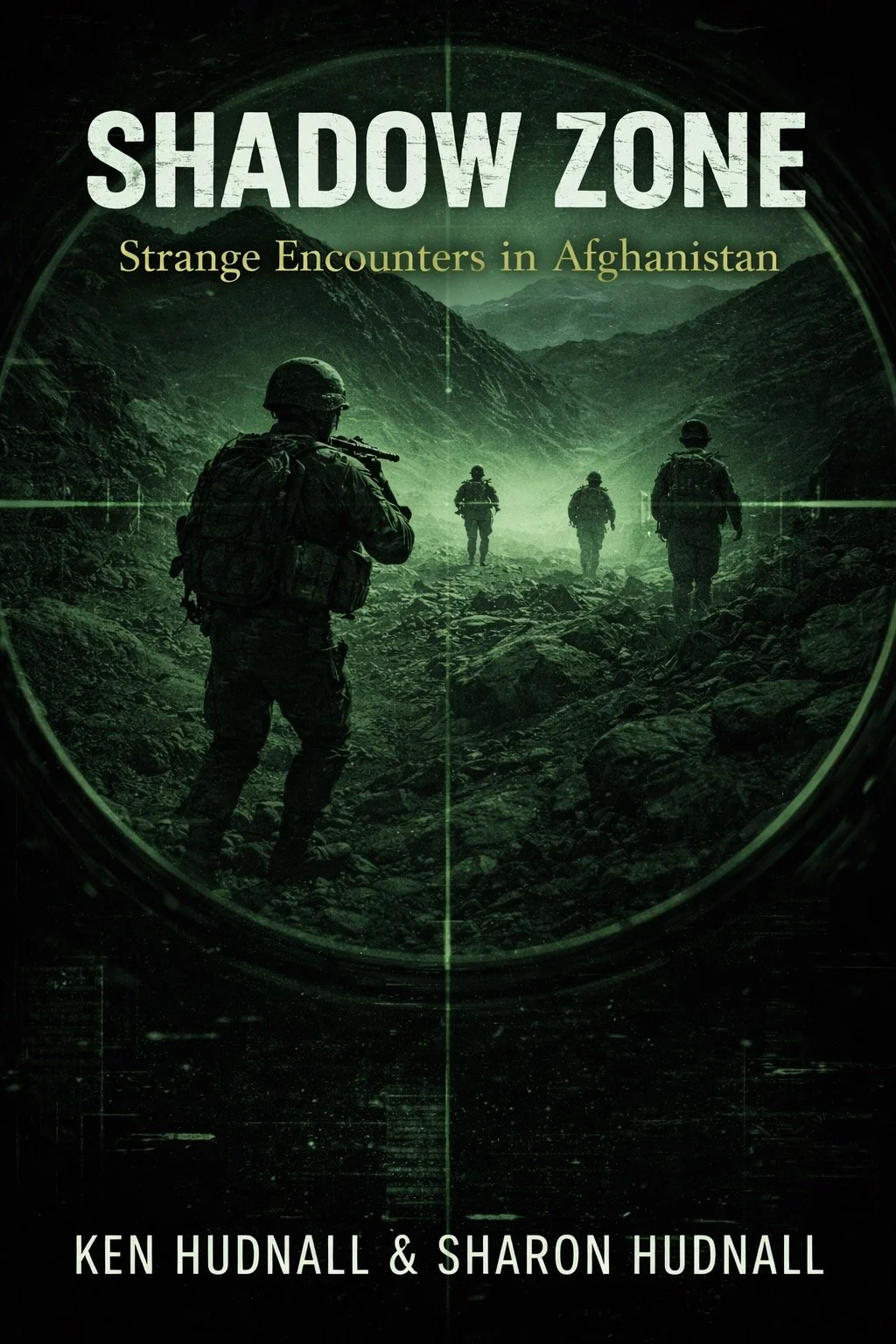
In Shadow Zone: Afghanistan, Ken Hudnall and Sharon Hudnall compile witness accounts from deployed personnel and examine a pattern repeated across different units, years, and provinces: trained observers encountering events that behaved like reality until the moment verification should have confirmed them.
Ancient land.
Modern soldiers.
The same unanswered experiences.
A war zone where not every contact could be identified.
Modern warfare brought soldiers into some of the oldest inhabited landscapes on Earth — valleys where armies have marched for thousands of years and where local traditions warned of places best avoided after dark.
During night patrols, watch rotations, and remote outpost duty, service members reported encounters that did not fit combat, equipment malfunction, or misidentification.
Figures walking along ridgelines miles from any village.
Voices carried across empty terrain with no visible source.
Shapes seen through optics that vanished to the naked eye.
Movements tracked on thermal devices where nothing stood.
Lights appearing in restricted valleys long after air operations had ended.
Most of these incidents were never formally recorded.
They did not interfere with operations — and no explanation could be offered.
In Shadow Zone: Afghanistan, Ken Hudnall and Sharon Hudnall compile witness accounts from deployed personnel and examine a pattern repeated across different units, years, and provinces: trained observers encountering events that behaved like reality until the moment verification should have confirmed them.
Ancient land.
Modern soldiers.
The same unanswered experiences.
A war zone where not every contact could be identified.